Spain finalises Gibraltar’s ‘long overdue’ removal from its tax ‘blacklist’
Spain has officially removed Gibraltar from its list of non-cooperative tax jurisdictions, ending a designation that had been in place since 1991. The decision changes Gibraltar’s tax treatment in Spain, removes several anti-abuse measures and comes ahead of the new UK-EU agreement on Gibraltar’s future relationship with the European Union.
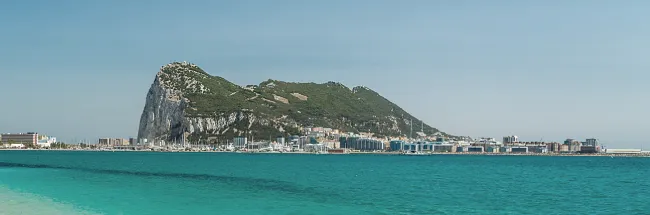
The Spanish government formally removed Gibraltar from its blacklist of ‘non-cooperative jurisdictions’ for tax purposes, as of 28 June, following publication of a ministerial order by the Ministry of Finance in the official State Gazette.
The move finally brings an end to a designation that has endured for more than three decades. Gibraltar was included on Spain’s first list of tax havens in 1991 but has undergone a substantial transformation as an international financial centre in the intervening years.
Gibraltar was formally added to the OECD ‘white list’ in October 2009 and became a signatory to the OECD’s Multilateral Convention on Mutual Administrative Assistance in 2014. Significantly, it has never appeared on the European Union’s own list of non-cooperative jurisdictions in respect of tax information exchange.
In 2019, Spain and the UK signed a tax agreement in respect of Gibraltar, which established a framework for tax cooperation and transparency between Gibraltar and Spain and removed the basis upon which Spain had continued to maintain Gibraltar on the list. When this agreement came into force in March 2021, Spain committed explicitly to remove Gibraltar from its blacklist within two years.
“This is a long-overdue and very welcome step by Spain. For 35 years, Gibraltar has carried the label of a tax haven. That label was wrong. It was wrong when it was first applied in 1991, and it became harder to justify with every passing year as we built one of the most transparent, well-regulated financial centres in the world. Spain has now started the process of correcting the record,” said Gibraltar Chief Minister Fabian Picardo.
“The commitment made in 2021 when we signed the International Tax Agreement was clear: delist Gibraltar. It took longer than it should have, and that delay had real consequences for our economy and our reputation. But what matters now is that Spain is acting on its word. This is good news for Gibraltar, for our financial services sector, and for the many businesses and individuals on both sides of the border whose working lives were affected by this outdated designation.”
The delisting of Gibraltar by Spain will lead to a structural change in its tax treatment. Spain will no longer automatically apply domestic anti-abuse measures in respect of personal, corporate and non-resident income. It will also eliminate enhanced requirements and end Gibraltar’s automatic exclusion from certain tax benefits.
Importantly, the timing of the Spanish delisting comes in advance of the new post-Brexit agreement between the UK and the EU in respect of Gibraltar, which was finalised in February and is due to come into force in July.
The main objective of the Agreement is to remove all physical barriers on persons and goods circulating between Spain and Gibraltar. Gibraltar is not joining the EU Customs Territory; it is entering into a bespoke arrangement that enables the free circulation of goods between Gibraltar and the EU without customs checks at the land frontier.
Gibraltar’s current import duty regime will be replaced by a new Transaction Tax (TT), which will be levied at the point of importation or manufacture, or when goods are brought out of bond, rather than at the point of sale. Set initially at a transitional standard rate of 15%, it will increase to 16% in year two and, from year three, will be aligned to the lowest standard rate of VAT applied across the EU, currently 17%.
The Agreement also establishes a new system for the movement of persons, designed to remove all routine immigration checks and physical barriers at the land border while maintaining stability and security across Gibraltar and the Schengen Area. Gibraltar will remain outside both Schengen and the EU, but Schengen border rules will apply at its external border under a tailored arrangement between the UK and EU.
Alongside Gibraltar, Spain’s ministerial order also delisted Barbados, Dominica, Seychelles and Trinidad & Tobago from its blacklist of ‘non-cooperative jurisdictions’ for tax purposes, while Samoa was removed in respect of its offshore business regime. However, Russia was added to the blacklist in respect of its international holding companies tax regime.