International Logistics and Maritime Trade: When Structure Becomes a Strategic Issue
As logistics and maritime businesses expand across multiple jurisdictions, their operating structures often struggle to keep pace with international growth. Effective international corporate structuring helps align governance, ownership, risk management and operations, creating a stronger platform for financing, expansion and long-term business success.
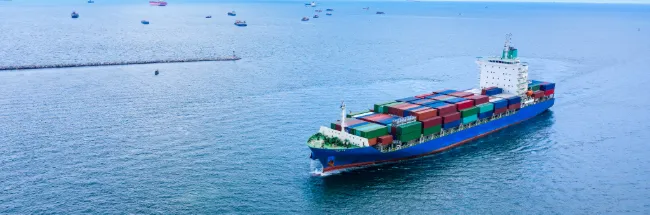
For companies operating in logistics and maritime trade, international exposure is no longer an exception, it is the norm. Freight forwarders, shipping company, shipping operators, and integrated trading groups routinely manage cross-border contracts, operations, global clients, multi-currency flows, and operations spanning several jurisdictions.
In practice, we increasingly see large organisations in logistics and maritime that:
- operate across multiple regions but remain structured through a single main entity,
- manage international contracts, financing, and risks without clear separation,
- have grown rapidly, with their structure lagging behind their operational footprint.
When Operations Outpace Structure
As businesses expand globally, a number of challenges naturally begin to emerge.
- decision-making, legal risk, and profitability concentrated in a single entity,
- limited distinction between operations, management, and ownership,
- increasing scrutiny and corporate governance from banks, insurers, and counterparties,
- difficulties in supporting further expansion, financing, or long-term careful planning.
Left unaddressed, these situations can lead to pressure on banking relationships, reduced flexibility in accessing financing and increased financial risk, and growing complexity when engaging with investors, auditors, or regulators.
At this point, growth is no longer constrained by operational capability, but rather operational effectiveness and the importance of a clear structure.
Structure Is Not About Entities
International structuring is often misunderstood as a discussion about jurisdictions or legal vehicles. In reality, it is more about alignment and it starts with more fundamental questions:
- Where are strategic decisions truly made?
- How are risks distributed across the group?
- Where is value created, managed, and controlled?
- Is governance aligned with the operational reality of the business?
Only once these elements are clearly understood does it become relevant to determine where the right jurisdiction is and how the corporate structures should be part of the solution.
From Operational Efficiency to Institutional Credibility
Moving from a single, centralised operating model to a more aligned and structured framework often represents a turning point for logistics and maritime groups.
An example is one of our clients in the international shipping sector, whose operational footprint spans multiple jurisdictions. As the business expanded, ownership, investment, and financing functions were separated from day-to-day operations through a dedicated Mauritius holding company. Hong Kongs acts as the main fleet manager entity and is the groups commercial management centre, while regional activities are coordinated from India. This structure aligns ownership, governance, and operational responsibilities across the group, creating a clearer framework for growth, financing, and risk management.
In this context, Mauritius serves as part of the wider corporate architecture rather than the centre of operations. The jurisdiction provides a platform through which investments, vessel-owning entities, and capital management can be coordinated, while operational activities remain located closer to customers, assets, and key markets.
Any fiscal efficiency achieved is typically a consequence of a coherent structure, not its primary objective.
Mauritius as Part of a Broader Framework
Due to its strategic position between Africa, Asia, Europe, and the Middle East, Mauritius is often recognised for international trade and as a foreign direct investment hub. However, for many logistics, maritime, and trading groups, its value extends beyond it’s geographical connection to different countries.
As businesses expand across multiple jurisdictions, the focus increasingly shifts from where operations take place to how ownership, governance, financing, and risk are structured across the group. In the example above, while India remains an important operational hub and Hong Kong serves as the centre for commercial shipping activities, Mauritius provides an additional layer of value through its role as a holding and investment platform.
For companies involved in ship management, logistics, supply chain operations, cargo, and global trade, Mauritius is therefore often considered not simply because of its location, but because of its ability to support a more aligned international structure. When combined with appropriate governance, substance, and operational alignment, it can serve as a neutral coordination platform for managing cross-border investments, ownership, and capital within a growing international group.
How we Support International Structuring
At Sovereign Group, we support international logistics, maritime, and trading groups by focusing first on structure, governance, compliance and alignment with reality.
We are often brought into discussions at the stage where businesses recognise that their operational footprint has become international, but their structure has not yet evolved accordingly.
With nearly 39 years of experience and a presence in 23 jurisdictions worldwide, our role is to help build frameworks that are credible, sustainable, and aligned with how the business truly operates.
The most successful logistics companies are not only those that move goods efficiently across borders, but those that recognise when their business has become truly international and ensure that their structure evolves accordingly.
For leadership teams, the question is no longer simply how to grow, but whether the underlying structure is ready to support that growth over the long term.
If you have interest in understanding how Mauritius might fit into your company structure, contact us. We can assist with corporate structuring, corporate governance, how double taxation treaties can be leveraged and give you a realistic overview of entity setup and delivery timelines to begin operations on the island.