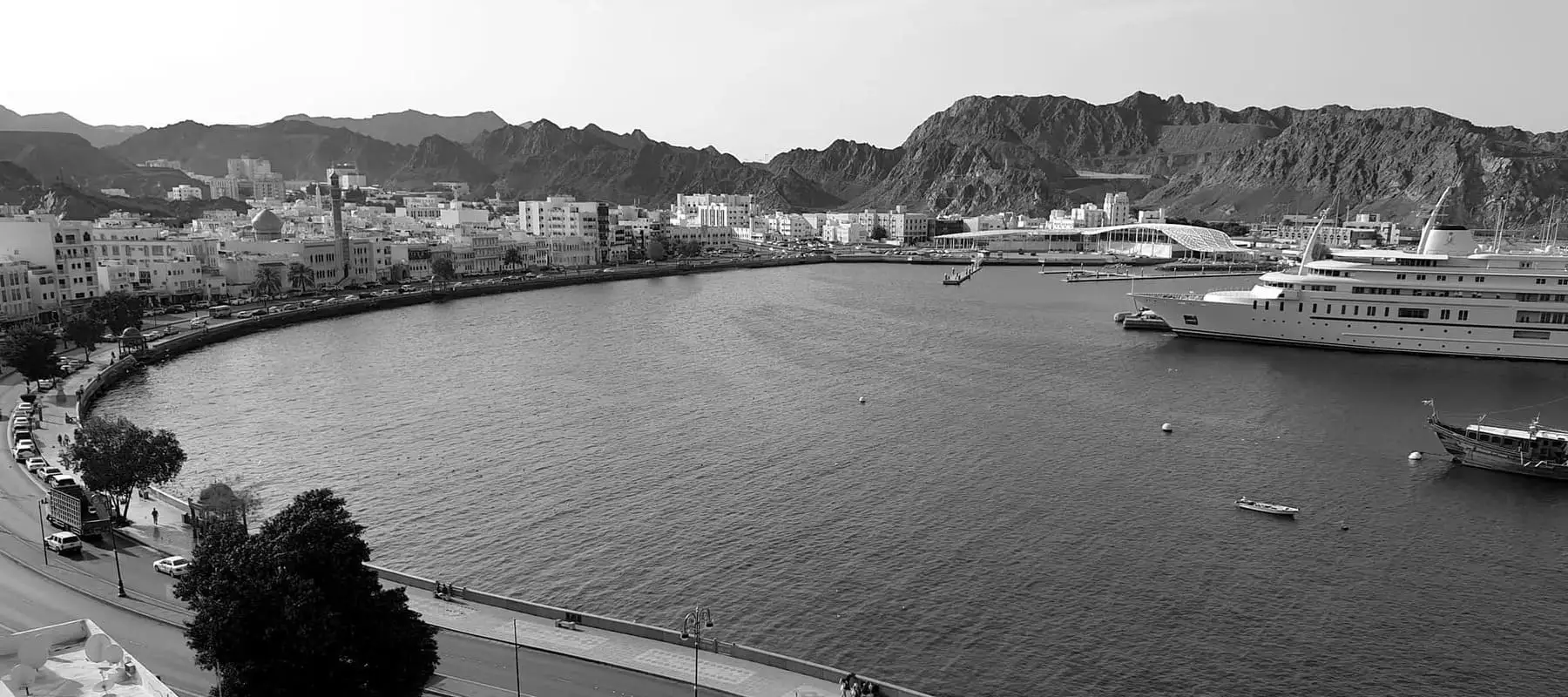
About Oman
Positioned outside the Strait of Hormuz on major global trade routes linking Asia, Africa and Europe, Oman’s strategic location, stable political environment, investor friendly policies and modern infrastructure have made it a recognised entry point for the GCC and Indian Ocean markets.
Launched in 2020, Oman Vision 2040 is the Sultanate’s blueprint for sustainable growth and global integration. It enshrines a diversified and resilient economy that is less reliant on oil and prioritises logistics, manufacturing, renewable energy, mining, fisheries and tourism, while fostering a globally integrated and prosperous society.
A key focus is strengthening the investment climate and improving the ease of doing business in Oman to support private sector led growth, foreign investment and job creation. A new Foreign Capital Investment Law (FCIL) was brought into force in 2020, which removed minimum capital requirements and allowed foreign investors to own 100% of their businesses in most sectors in mainland Oman.
Some business activities are still reserved for Omanis and other activities still require a local Omani partner with a minority shareholding. The Ministry of Commerce, Industry and Investment Promotion (MOCIIP) maintains a list of commercial activities that are prohibited to foreign investors, which includes recruitment, vehicle repairs and fuelling stations, and the manufacture of traditional Omani products.
Central to Oman Vision 2040 is economic diversification and building both a knowledge and technology-driven economy and a skilled workforce. In practice, this means investing in digital infrastructure, encouraging R&D and nurturing new industries, the construction of industrial hubs and free zones, the development of technology parks and innovation centres.
The General Authority for Special Economic Zones and Free Zones (OPAZ) was set up in 2020 to oversee Oman’s special economic zones, free zones and industrial cities. It drives digital transformation and encourages foreign investment by offering tax exemptions, streamlining procedures and developing strong infrastructure to support various sectors for long-term growth.
The key areas under OPAZ supervision are the Special Economic Zone at Duqm, Al Mazyunah Free Zone, Salalah Free Zone, Sohar Free Zone, the Public Establishment For Industrial Estates – Madayn, and Khazaen Economic City.
Committed to economic diversification and sustainability, Oman Vision 2040 has been accompanied by the creation of a start-up ecosystem to attract international investments, the introduction of new legal regulations to simplify business operations, collaboration with international institutions in the education sector and undertaking renewable energy initiatives.
The construction of the UAE–Oman railway, covering 303 kms linking Abu Dhabi in the UAE with Sohar in Oman, forms part of a broader vision to connect the GCC countries through a comprehensive rail network to facilitate trade, enhance logistics and stimulate tourism and economic activities across the region.
Oman is also investing ports, free zones, and airports. These include the development of Duqm – a Special Economic Zone spanning over 2,000 sq. km. with a deep-sea port – and upgrades at the ports of Salalah on the Gulf of Aden and Sohar at the entrance to the Strait of Hormuz.
Also central to Oman’s transformative journey to diversify its economy are ‘Omanisation’ and ‘In-Country Value’ (ICV). These strategies aim to enhance local employment, develop national competencies and retain economic value within the country. ICV is defined as the total spending retained in-country that can benefit business development, contribute to human capability development and stimulate productivity in Oman’s economy.
These reforms together with membership of the World Trade Organisation and an expanding network of free trade agreements continue to make the Sultanate an appealing base for regional operations for foreign investors. Many investors also value Oman’s predictable legal system and the ease of connecting to other GCC markets from Muscat or Sohar, which adds to its appeal as a base for expansion.
Establishing a Company
Foreign participation in the Omani market is regulated by the Ministry of Commerce, Industry & Investment Promotion (MoCIIP). Investors can choose from several business structures, the most common being:
- Limited Liability Company (LLC) – the standard vehicle for commercial activity. Since 2020, most business categories allow 100% foreign ownership.
- Branch Office – frequently used when a foreign company has a specific contract or project in Oman.
- Representative Office – limited to market research and liaison work.
- Joint Stock Company – required for larger enterprises seeking to list shares or attract public investment.
- Free Zone Company – established within Oman’s Free Zones and Special Economic Zones, each offering attractive tax and customs duty incentives.
Oman Company Formation
The incorporation process begins with reserving a trade name and securing company registration with the MoCIIP. Depending on the activity, other approvals may be required from specific sector regulators. Having the required documents in order before submission can help avoid delays in the company registration process.
Following registration, you can obtain a tenancy agreement, activate trade licences and register with the relevant authorities according to your business activities. Most companies must also register with the Oman Chamber of Commerce & Industry, obtain municipal permits and enrol local and foreign employees with the Public Authority for Social Insurance.
For some sectors additional technical clearances may be required, which we will help to coordinate directly with the relevant supervisory authority.
Tax and Regulatory Framework
Oman applies a corporate income tax rate of 15%. Smaller businesses that meet prescribed thresholds may qualify for a reduced corporate tax rate of 3%. There is no personal income tax and no capital gains tax. Withholding tax at 10% may apply to certain payments made to non-residents, including royalties and service fees.
It is worth noting that Oman’s tax regime is relatively straightforward compared with other Gulf jurisdictions, although enforcement standards are increasing. Companies are expected to keep proper accounting records in accordance with International Financial Reporting Standards (IFRS) and to submit audited financial statements each year. Oman has signed numerous double-tax treaties which help reduce cross-border tax exposure.
Foreign Investment Incentives
Oman’s network of Free Zones and Special Economic Areas offers a range of benefits. These typically include long-term tax holidays, exemptions from import duties, simplified customs procedures and unrestricted repatriation of profits.
The Special Economic Zone at Duqm is a central component of this strategy. It combines industrial, maritime and logistics facilities and continues to attract large-scale manufacturing and energy projects. In recent years Duqm has drawn interest from European and Asian investors looking for a central Gulf base outside the major hubs. The Sohar and Salalah free zones also serve as gateways for trade through deep-water ports and road links into the wider GCC. Each zone has its own set of incentives and operational advantages, which should be matched to the investor’s intended business activity.
Working with Sovereign
Sovereign has proven expertise in helping businesses and foreign investors navigate Omani commercial law and licensing procedures. Our role is to coordinate the business setup and company registration, whether on the mainland or in Oman’s free zones, ensure documentation meets regulatory standards and keep entities compliant once they are operational. Typical areas of support include:
Each engagement begins with a review of the client’s objectives. We then recommend the structure and business licence that will align best with the client’s commercial activity, ownership needs and long-term planning. It is a tailored process rather than a standard package, since each case depends on activity type and ownership structure.
Ongoing Administration
Once the company is active, Sovereign provides the administrative support needed to maintain it. This includes:
- Maintaining statutory records and board documentation.
- Preparing and filing returns and resolutions.
- Managing payroll, insurance and HR documentation.
- Coordinating with auditors and tax advisers.
- Providing compliance checks on Economic Substance and Anti-Money Laundering requirements.
Our aim is to give clients continuity and confidence, so that management can focus on business development. This approach that keeps day-to-day operations efficient while maintaining full regulatory compliance.
Contact Sovereign
Sovereign has more than 35 years of experience establishing and managing companies throughout the Gulf. We can also assist with restructuring existing companies to allow 100% Foreign ownership. Our team in Muscat can advise on suitable structures and guide you through each stage of company registration and business operations. To discuss your business plans or request an outline of set-up costs and timelines, please contact one of our Corporate Services Consultants.
Please contact us if you have any questions or queries and your local representative will be in touch with you as soon as possible.