The Best Free Zones in the UAE Investors Keep Returning To
With more than 40 free zones across the UAE, selecting the right one depends on your business activity, ownership structure and long-term objectives. This guide compares the free zones investors choose most often, including DIFC, ADGM, DMCC, JAFZA and RAK ICC, and explains why they continue to attract international businesses.
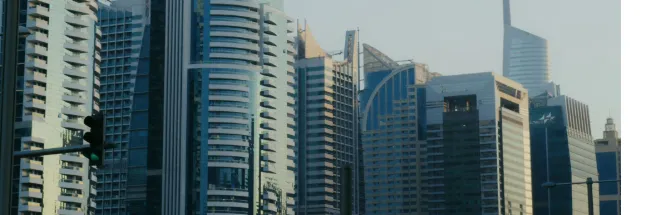
Investors approaching the UAE market tend to encounter a free zone in UAE early because of streamlined registration, full foreign ownership, complete foreign ownership rights, full repatriation of profits and capital, and tax advantages such as no personal income tax and, in many cases, 0% corporate tax for qualifying businesses. Over time, UAE free zones have become embedded in how businesses and investment structures are built across the region, attracting both foreign investors and international businesses.
The UAE now hosts many free zones, and the zones in the UAE differ by industry focus, permitted business activities and regulatory framework. On paper, that creates a wide range of options. In practice, choosing the right free zone depends on industry type, and a smaller group tends to feature repeatedly once investors begin to move beyond initial comparisons and into structuring decisions.
Each free zone has its own authority, and the relevant free zone authority applies specific rules on licensing and compliance. These frameworks help create a business friendly environment that continues to attract foreign investment into the region.
Most free zones have a streamlined setup process, but some require a physical office or dedicated office space, and setup timelines in Dubai free zones can range from a few days to a few weeks.
Core application requirements usually include a completed form, passport copies and, in some cases, a business plan.
Certain jurisdictions stand out because of how they have developed over time, with systems that are easier to work with as businesses evolve, and the best suited free zone also depends on long term growth plans and overall business structure.
Where structure meets familiarity
One of the more noticeable trends is how often established free zone companies are used as a base for multi-layered structures. This is particularly visible in Dubai and Abu Dhabi, where entities are not always standalone businesses but part of a wider arrangement that may include holding companies, operating subsidiaries and cross-border ownership.
In that context, predictability becomes more important than initial cost or speed. Businesses tend to prioritise jurisdictions where licensing and regulatory expectations follow a consistent pattern. Once those elements are understood, it becomes easier to replicate or expand the structure without reworking the foundations each time.
This helps explain why certain names continue to appear. Over time, they have become familiar not just to investors, but to banks, auditors and counter parties, which reduces friction as structures become more complex. Access to banking relationships and a smoother route to opening a corporate bank account is often a factor considered by international investors.
Financial centres, legal frameworks, and foreign ownership
DIFC and ADGM illustrate this clearly. Both operate under common law systems with their own courts and regulators, which places them closer to international financial centres than traditional free trade zones.
That legal framework tends to attract holding structures and investment vehicles where governance needs to follow recognized standards. Contracts and dispute resolution processes are structured in a way that many international businesses already understand, which simplifies cross-border activity.
Dubai International Financial Centre (DIFC), with over 6,920 active companies in finance and legal services, has built a broad financial ecosystem over more than two decades, backed by a 0% corporate tax guarantee for 50 years. ADGM, although newer, has expanded quickly and is widely used for special purpose vehicles and asset holding arrangements. DIFC is also a premier financial and legal hub in the UAE. In both cases, the environment supports structures that are intended to operate over the long term rather than as short-term setups.
Scale, operational flexibility, and business setup
Elsewhere, scale plays a different role. Dubai Multi Commodities Centre hosts over 21,000 businesses across a wide range of sectors. It is also a leading hub for commodities trading in the UAE.
That level of activity creates a certain type of environment. Processes become standardised, service providers become familiar with requirements and businesses can operate with fewer unknowns. For trading companies in particular, this consistency can be more valuable than a lower entry cost in a less established jurisdiction, helping deliver long-term cost efficiency.
It also allows for growth within the same structure. Companies can expand their activities without needing to relocate, which becomes more relevant as they mature. By contrast, Dubai Internet City is designed for large technology firms. DIC and DMC also cater to media companies and technology giants, while supporting tech companies with infrastructure built around those sectors.
Infrastructure, tax advantages, and long-term operations
Jebel Ali Free Zone reflects a different aspect of the free zone model, benefiting from a strategic location that supports global trade, global markets, international trade, and increasingly complex global supply chains across the Middle East.
Founded in 1985, JAFZA now supports over 9,500 companies and 15 million containers annually. JAFZA is also recognized for logistics and trading businesses. For businesses dealing with import, export or distribution, that reduces the need to build operational processes from scratch. Instead, they are working within an environment that already supports those activities, with direct access to key ports and airports.
Free zones offer different license categories, and manufacturers in particular need an industrial license, while some can also offer 100% exemptions from import and export duties.
This tends to attract foreign companies planning longer-term business operations, where continuity and infrastructure matter more than initial setup speed.
Layered structures, holding entities, and free zone companies
At the other end of the spectrum, jurisdictions such as RAK ICC are often used at the holding level rather than for active operations. By contrast, a free zone establishment is usually used for active setup, with a simpler single-shareholder structure that suits entrepreneurs and smaller businesses. These entities typically sit above operating companies, holding shares or assets as part of a wider structure.
This layered approach appears frequently where ownership needs to be separated from day-to-day activity. It allows businesses to manage risk, plan for succession or organise investments across multiple jurisdictions.
RAK ICC has registered tens of thousands of companies, reflecting how widely this type of structure is used. The simplicity of the framework makes it suitable for holding arrangements, particularly where the operating activity sits elsewhere. For businesses comparing operating setups instead, RAKEZ and SAIF Zone are among the most cost-effective free zones in the UAE, unlike structures designed primarily for holding purposes.
Newer options and shifting demand
Alongside these established jurisdictions, newer free zones are also gaining traction as affordable free zones offering affordable business setup packages for companies comparing cost and flexibility. DWTC is one example, particularly among service based businesses looking for a central Dubai presence.
Its appeal is partly practical. Location, accessibility and a straightforward regulatory approach make it suitable for companies that rely on client interaction and visibility, while its office solutions can help businesses balance compliance needs with operational costs. The International Free Zone Authority is another option, with competitive pricing and setup costs in Dubai starting at AED 12,900. In some cases, IFZA also offers affordable licenses starting at AED 5,750 without a physical office. ajman free zone is the cheapest free zone mentioned here, with licenses starting at AED 4,888. sharjah media city is also a cost-effective choice for digital businesses, with licenses from AED 5,750. Umm Al Quwain Free Trade Zone starts at AED 5,500 per year. As more businesses establish themselves there, familiarity with the jurisdiction continues to build.
This reflects a broader pattern across the UAE. While established free zones remain central to many structures, newer jurisdictions are gradually finding their place as demand evolves.
A system shaped by use
What emerges from all of this is not a fixed hierarchy of free zones, but a pattern of use. With over 40 Free Zones in the UAE, comparison matters more than any single ranking. Certain jurisdictions appear more often because their frameworks have been tested across a wide range of structures.
For investors, that tends to reduce uncertainty as businesses grow or change. Structures can be expanded or adapted with fewer adjustments, which becomes more important over time than the initial setup.
The choice of free zone, then, is less about identifying a single best freezone in UAE and more about understanding how a particular jurisdiction fits within a broader structure.
Dubai free zones commonly issue six license types, including business license categories such as a professional services license for consulting and creative businesses, licenses for e commerce activities, and tourism licenses, which are mandatory for travel agencies and hotels. Certain zones are built around specific industries, which can create numerous benefits for businesses that need a more supportive environment. Those differences often carry strategic advantages that go beyond setup cost alone. They also affect visa eligibility, especially where office requirements determine access to a uae residency visa. In practice, visa costs and the operating scope available to mainland companies are part of the same comparison. Fujairah Creative City, for example, offers options for freelancers, with licences starting from AED 5,520, and freelancers need a specific freelance permit to operate.
How Sovereign PPG can support
Setting up within a UAE free zone is often the starting point, but structuring becomes more important as businesses expand, add entities or operate across multiple jurisdictions.
Sovereign PPG supports clients in establishing and maintaining these structures, coordinating with free zone authorities, banks and service providers to keep each stage aligned, from setup through to ongoing support.
Whether you are assessing the best free zones for your sector, considering a low cost business setup, or looking to attract foreign investment through a well-structured vehicle, our team can help identify the most appropriate solution.